Chalk Board Backgrounds: A Practical Guide for Creators and Educators
In the world of digital design and visual communication, texture is often the unsung hero that separates a flat, forgettable image from one that feels tactile and engaging. Chalk Board Backgrounds offer exactly this kind of grounded authenticity. They are not just black rectangles; they are high-resolution JPEG photo sets that capture the subtle imperfections, dust motes, and grainy character of real slate surfaces. For anyone looking to add a touch of organic warmth to their projects, these backgrounds serve as a versatile foundation that bridges the gap between traditional classroom aesthetics and modern graphic design trends.
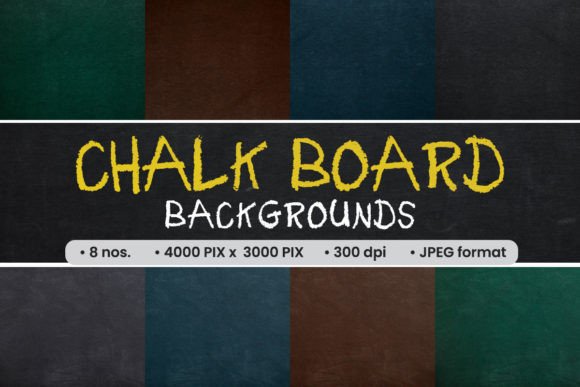
The appeal of an empty chalkboard texture lies in its neutrality. Unlike busy patterns or vibrant colors that demand attention, a chalkboard background recedes slightly, allowing your foreground content—whether it is bold typography, intricate illustrations, or product photography—to take center stage. This collection provides eight distinct variations, ensuring that you are not stuck with a single, repetitive look. Each file is delivered as a high-quality JPEG, measuring 4000 pixels by 3000 pixels. This resolution translates to 13.33 inches by 10 inches at 300 DPI, which is more than sufficient for both crisp digital displays and professional-grade printing.
Why Texture Matters in Digital and Print Media
We live in an era of sleek, vector-based perfection. While clean lines have their place, they can sometimes feel sterile or corporate. Introducing a chalk board background injects humanity into your work. It suggests effort, creativity, and a hands-on approach. When a viewer sees the slight variation in the dark surface, their brain registers it as something tangible. This psychological connection is powerful for marketers and educators alike.
Consider the difference between a plain white slide in a presentation and one that uses a subtle chalkboard texture. The latter implies a workshop environment, a space for brainstorming, and a willingness to iterate. It lowers the barrier to entry for the audience, making complex information feel more approachable. For bloggers and website owners, using these textures as section dividers or hero backgrounds can break up the monotony of solid colors, keeping the reader’s eye engaged without causing visual fatigue.
Real-World Applications for Educators and Institutions
The most obvious home for these assets is in education, but their utility goes far beyond simple decoration. Teachers creating digital worksheets, online course materials, or remote learning presentations can use these backgrounds to maintain a familiar classroom atmosphere. A math tutorial overlaid on a realistic slate surface feels intuitive because it mimics the physical tool students are used to seeing.
For school administrators and college program coordinators, these images are invaluable for promotional materials. Whether you are designing a banner for a science fair, a flyer for enrollment periods, or a backdrop for a graduation ceremony program, the chalkboard aesthetic signals academic rigor mixed with creative freedom. Because the files are high-resolution JPEGs, they hold up beautifully when printed on large-format posters or handouts. You do not need to worry about pixelation or blurriness, even when scaling up for lobby displays.
Elevating Small Business Branding and Packaging
Small business owners, particularly those in the artisanal, food, or craft sectors, often struggle to convey a "handmade" vibe in a digital marketplace. Chalk Board Backgrounds solve this problem elegantly. Imagine a local coffee shop creating its weekly menu board digitally. By placing elegant, handwritten-style fonts over a textured chalk background, they can share the menu on social media with the same charm as their physical sidewalk sign.
Packaging designers also benefit significantly from this resource. If you are creating labels for homemade jams, craft beers, or boutique soaps, a chalkboard element can suggest rustic quality and small-batch care. Since the collection includes various colors and tones, you can match the background to your brand palette. A darker, richer slate might suit a premium whiskey label, while a lighter, dustier board could complement organic skincare products. The key is that these are not layers you have to build from scratch; they are ready-to-use photos that save hours of design time.
Streamlining Workflow for Freelancers and Designers
One of the most practical aspects of this collection is its simplicity. There are no layers to manage, no complex PSD files to navigate, and no steep learning curve. You simply open the JPEG in any program that allows layers—such as Photoshop, Canva, GIMP, or even PowerPoint—and place your graphics on top. This efficiency is crucial for freelancers who bill by the hour or entrepreneurs who wear multiple hats and need to produce marketing materials quickly.
The dimensions of 4000 px x 3000 px provide ample room for cropping. If you need a square image for Instagram, a vertical story format, or a wide website banner, you can crop from the original file without losing quality. This flexibility means you only need to purchase and download one set to cover multiple aspect ratios across different platforms. The zipped file contains eight unique options, giving you variety without overwhelming you with choice paralysis.
Scrapbooking and Personal Creative Projects
Beyond commercial and educational uses, these backgrounds are a treasure trove for hobbyists. Digital scrapbookers can use them to create vintage-themed pages, adding a nostalgic feel to family photos or travel journals. The texture adds depth to flat digital layouts, making them feel more like physical albums. Crafters who design printable cards for birthdays, weddings, or holidays will find that a chalkboard background provides a sophisticated contrast to bright, cheerful floral elements or gold foil accents.
For those interested in DIY home decor, these high-resolution images can be printed on canvas or metal sheets to create custom wall art. You can overlay inspirational quotes, family rules, or grocery lists, print them out, and frame them for a customized look that matches your interior design. The ability to print at 13.33 inches by 10 inches at high quality ensures that the final product looks professional, not like a home inkjet experiment.
What to Consider Before Using Chalk Board Backgrounds
While these assets are incredibly versatile, successful implementation requires a bit of strategic thinking. First, consider legibility. Chalkboards are inherently dark or mid-tone. If you plan to overlay text, ensure your font color contrasts sharply. White, cream, pastel yellow, or light gray usually work best. Avoid dark blues or blacks, as they will disappear into the texture.
Second, think about the mood you want to convey. Not all chalkboards look the same. Some are freshly erased and smooth, suggesting clarity and new beginnings. Others are dusty and worn, implying history and established knowledge. Review the eight files in the set to choose the one that aligns with your message. A clean board might be better for a tech startup’s brainstorming session, while a weathered board suits a heritage brand’s storytelling.
Finally, remember that these are JPEGs, meaning they are flattened images. You cannot move the chalk dust or change the scratches. This is actually a benefit for performance, as JPEGs are smaller and faster to load on websites than layered PNGs or TIFFs. However, it means you must be comfortable working with the texture as a fixed base. Use blending modes in your design software if you want your text to interact more naturally with the grain, such as using "Overlay" or "Soft Light" for a more integrated look.
In summary, Chalk Board Backgrounds are more than just decorative images; they are functional tools that enhance communication through texture and tone. Whether you are a teacher aiming to make lessons more engaging, a business owner crafting a rustic brand identity, or a designer seeking efficient, high-quality assets, this collection offers a reliable solution. By understanding how to leverage these realistic surfaces, you can create visuals that resonate with audiences on a deeper, more tactile level.